From Beautification to Preservation: When Greenwood’s Women Took on City Hall
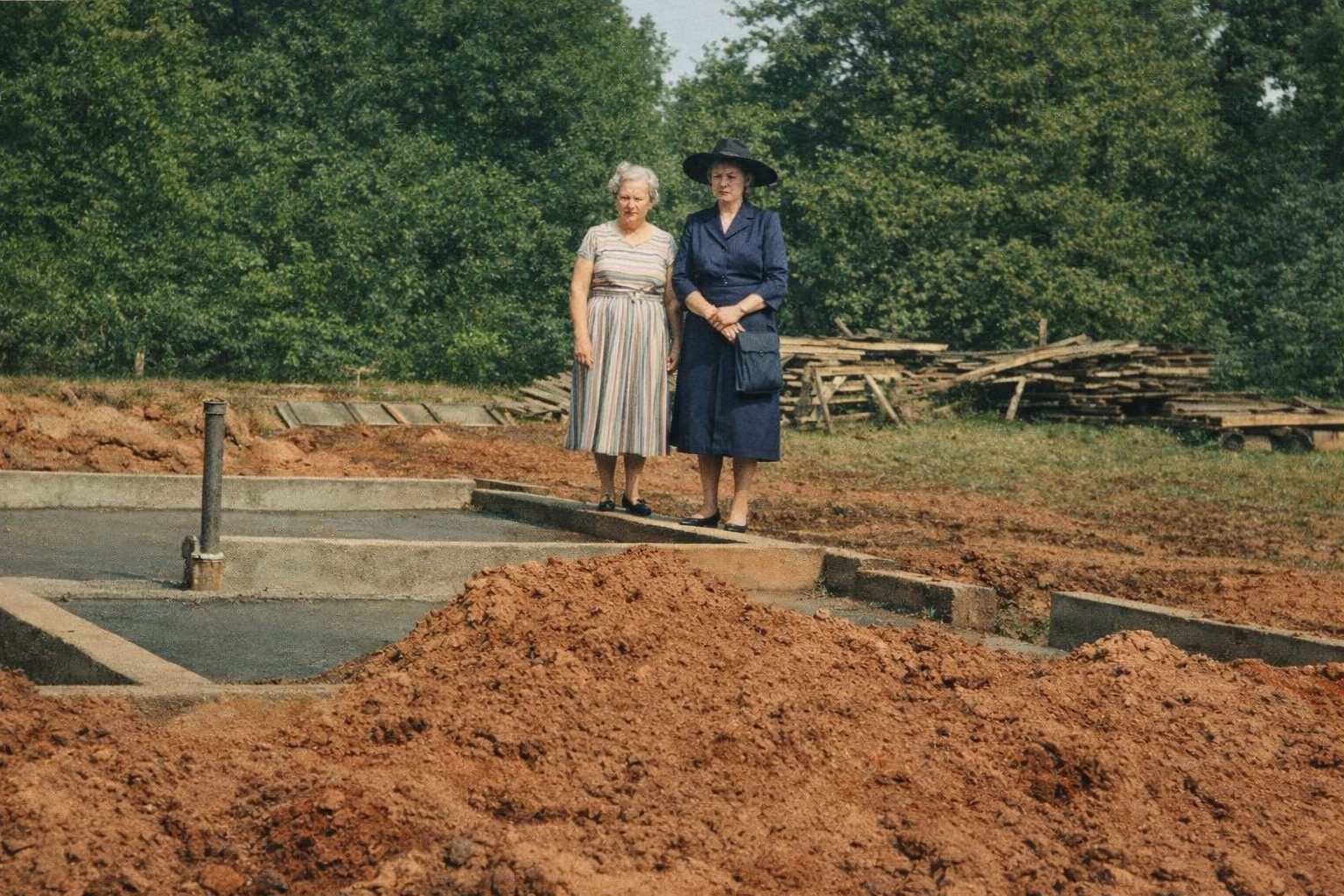
Mrs. E. G. Henne and Mrs. Isham Beard at Greenwood Cemetery, Jackson, Mississippi, c. 1959. Photograph originally published in the Jackson State Times. Digitally enhanced and colorized from a newspaper halftone image using artificial intelligence.
Greenwood Cemetery’s continued preservation was not always inevitable. In the mid-twentieth century, its care depended on the steady work—and at times determined resistance—of individuals who saw the cemetery as a place worth protecting.
Two very prominent members of that effort were Mrs. Isham (Norvelle Adams) Beard and Mrs. Luther (Louise) Manship, Jr. Their work together reflects the kind of civic leadership that combined beautification, restoration, documentation, and, when necessary, direct action to protect the cemetery.
Follow us on Facebook and Instagram
Norvelle Adams Beard was born in 1890 into a family deeply intertwined with Mississippi’s early history. Her great-grandfather, George Adams, was appointed a federal judge for Mississippi by President Andrew Jackson and served as an early political leader in the state. A generation later, her grandfather Wirt Adams became a Confederate cavalry officer and later a prominent Jackson banker. Her father, Wirt Adams Jr., continued the family’s civic presence in the city. All three generations are buried in Greenwood Cemetery, and Mrs. Beard herself is also buried here, making her lifelong connection to the cemetery both personal and generational.
In 1912 she married Isham Beard, and she became active in Jackson’s civic and cultural life, particularly through St. Andrew’s Episcopal Cathedral and a range of historical and lineage organizations. She served as president of the Mississippi Society of the National Society of the Colonial Dames of America from 1944 to 1950 and afterward became president of the Greenwood Cemetery Association, a role she would hold for many years.
True to the Public Trust Since 1823
From Pulitzer Prize winners to those who served from the War of 1812 through WWII, Greenwood is a chronicle of sacrifice and success. Help us fund the research, tours, and preservation efforts that bring this history to life. Join us in honoring the depth and complexity of the Mississippi story.
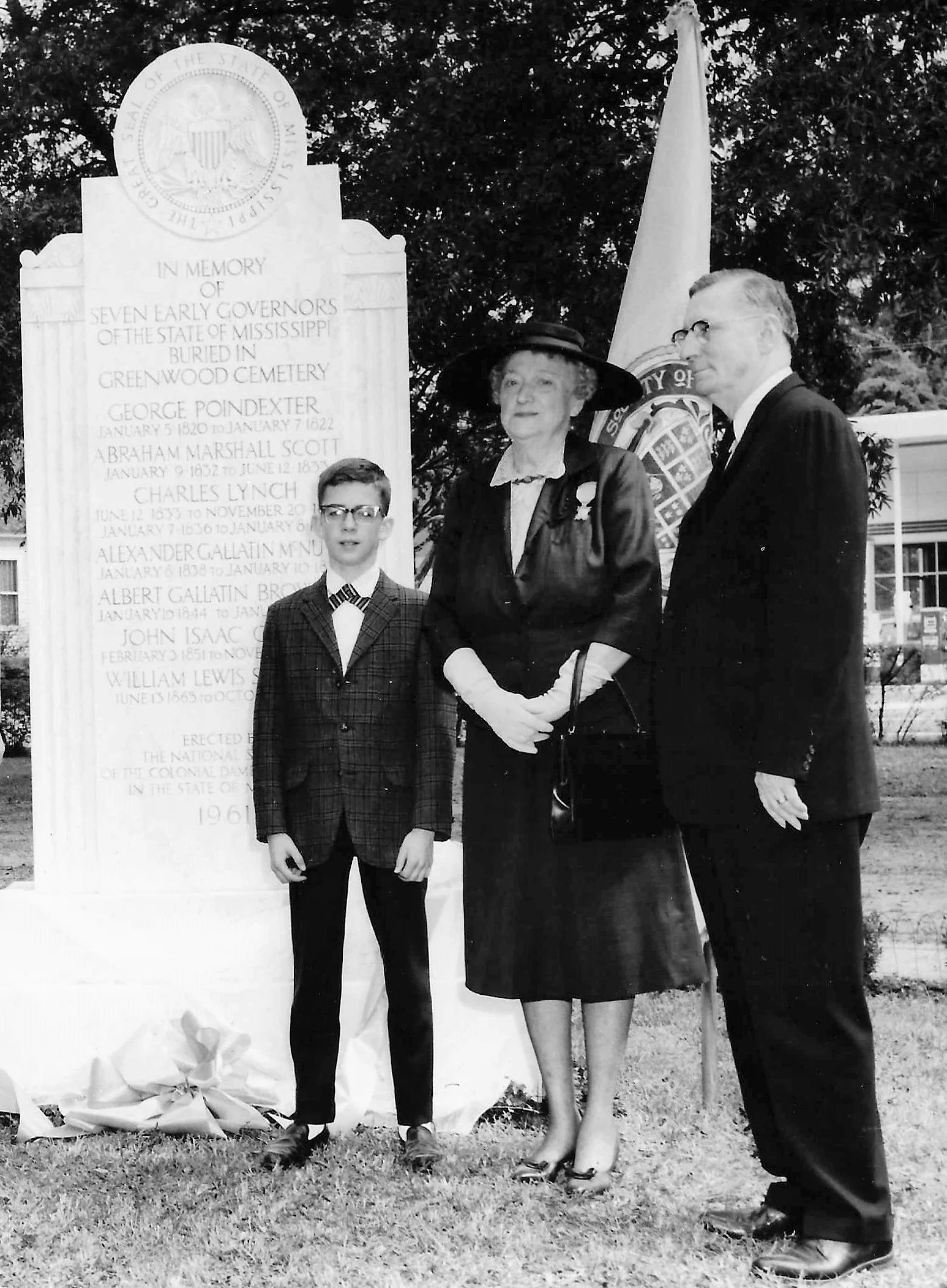
Dedication of the Colonial Dames’ Governor’s Monument (photo credit unknown). From left to right: Harry Lambdin (Mrs. Beard’s grandson), Mrs. Norvelle Beard and Governor Ross Barnett.
During her leadership, the Colonial Dames sponsored the installation of a monument near the cemetery entrance honoring seven early Mississippi governors, all of whom are buried in Greenwood. The monument reinforced the cemetery’s role as a place of public memory and historical interpretation.
Working alongside Mrs. Beard was Louise Manship, who served for many years as treasurer of the Greenwood Cemetery Association. Born in Pittsburgh, PA in 1886, she joined the American Red Cross in 1916 and served as a nurse during World War I, working in France with the United States Navy and later serving on Guam. After moving to Jackson in 1929, she became deeply involved in civic and charitable work across the city.
Her family connections also placed her within one of Jackson’s most influential civic circles. She was married to Luther Manship, Jr, and her father-in-law was Lt. Governor of Mississippi and his father was Charles Manship, who served as mayor of Jackson during the Civil War.
During World War II, she helped lead nurse recruitment in Mississippi for the Army and Navy Nurse Corps through the American Red Cross and served as a Gray Lady at the Veterans Hospital. She organized welfare efforts for children through the American Legion, led efforts such as Bundles for Britain during the Blitz, and worked in campaigns addressing cancer, polio, and other public health concerns. She also played a major role in organizing and leading auxiliaries connected to Jackson Memorial Hospital, and her contributions were later recognized when St. Dominic–Jackson Memorial Hospital commissioned and unveiled her portrait in honor of her service.
Do You Have More Information to Share?
Our historical research is never truly finished. Whether you have insights into our antique rose collection or stories of ancestors who rest here, your contribution helps Mississippi’s past come to life.
At Greenwood Cemetery, Mrs. Manship handled the financial and organizational side of the association’s work. Her records document plantings of magnolias, forsythias, weeping willows, and boxwoods—landscaping efforts that helped shape the appearance of the cemetery. Together, she and Mrs. Beard also helped document monuments and restoration work, preserving a visual record of the cemetery during this period.
Their work, however, extended well beyond beautification. One of the most important moments in the cemetery’s modern history came when the City of Jackson began constructing a storage garage inside the cemetery near its entrance. At that time, there was a sexton’s house located to the left of the front entrance. A sexton was responsible for the day-to-day care and operation of the cemetery, and the house served as both residence and operational center. Just to the west of that house, the city began building the garage.
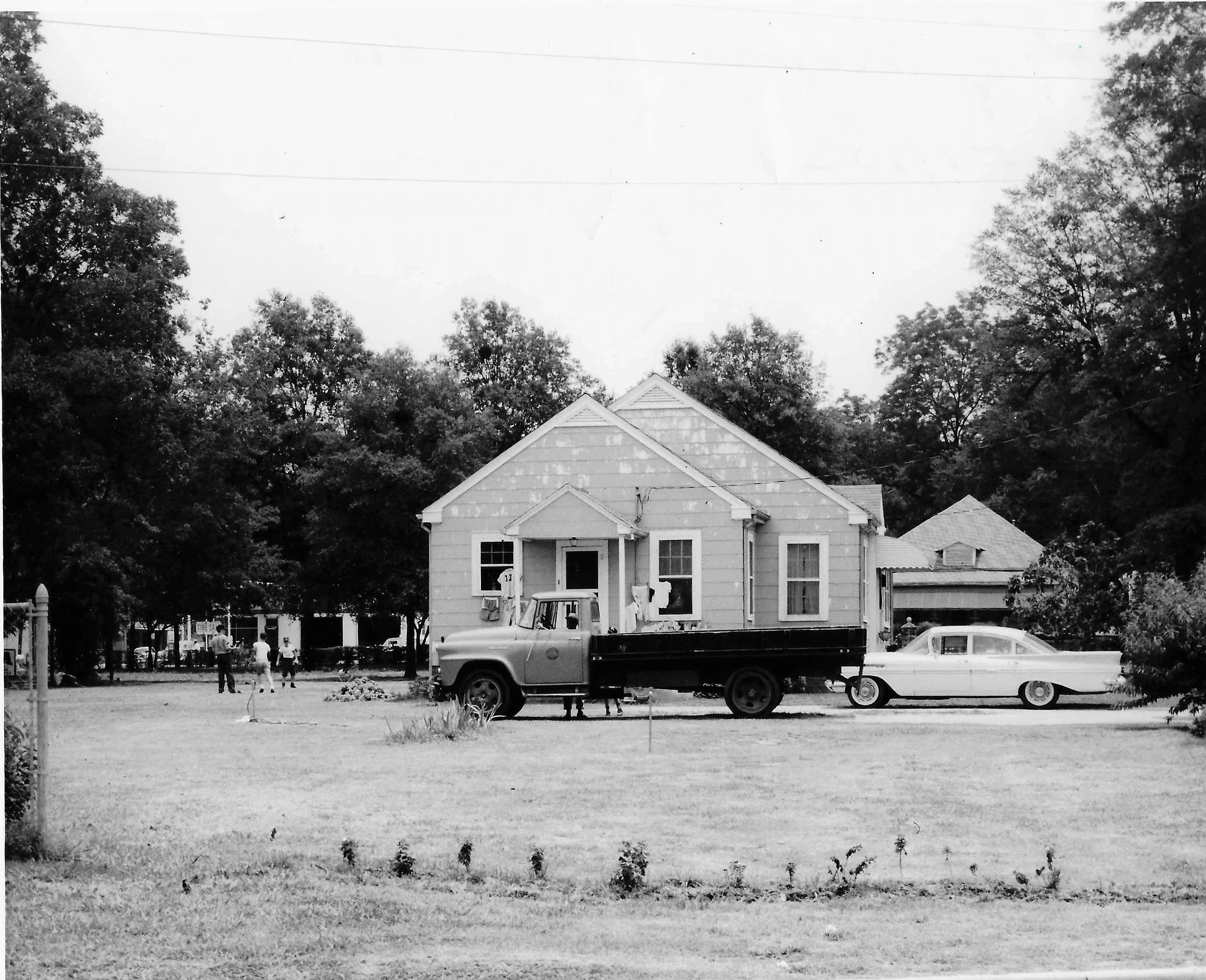
Former sexton’s house. Photo credit unknown.
The area selected for construction was not simply unused ground. It was part of a potter’s field—an area where individuals without means were buried, including enslaved people and convicts. Many of these graves were unmarked, but they were known to exist.
Members of the Greenwood Cemetery Association, including Mrs. Beard and Mrs. Manship, met with city officials on the cemetery grounds to challenge the construction. They were joined by a broader coalition of civic organizations, including the United Daughters of the Confederacy, represented by Mrs. E. G. Henne, who was serving as a leading figure in that organization and as press and publicity chairman for the cemetery effort.
Newspaper accounts at the time described the situation clearly: construction had begun, and the foundation for the garage had already been laid over graves more than a century old. The women argued that the city had unintentionally begun building over historic burials and pressed for the work to be stopped.
Their efforts were successful. City officials halted construction, agreed to remove the foundation, and committed to restoring the area. Members of the cemetery association were also given a role in advising the city on future restoration and care of the grounds.
This moment reveals something essential about the leadership of Mrs. Beard and Mrs. Manship. They were not only concerned with beautification or with preserving prominent graves. They were equally committed to protecting the integrity of the entire cemetery, including the most vulnerable and least visible burial spaces.
Together, they represent a generation of women who took seriously the responsibility of stewardship. Through organization, documentation, and, when necessary, direct engagement with city leadership, they helped ensure that Greenwood Cemetery remained intact. Their work preserved not only monuments and landscapes, but also the memory of those whose graves might otherwise have been lost.
Author’s Note: This article was written by the author with the assistance of AI tools. The author directed the research, structure, and interpretation of the material, and has edited and reviewed the final content for accuracy and clarity.