Sidney Dillon Redmond: From a Sharecropper’s Farm to Fame and Fortune
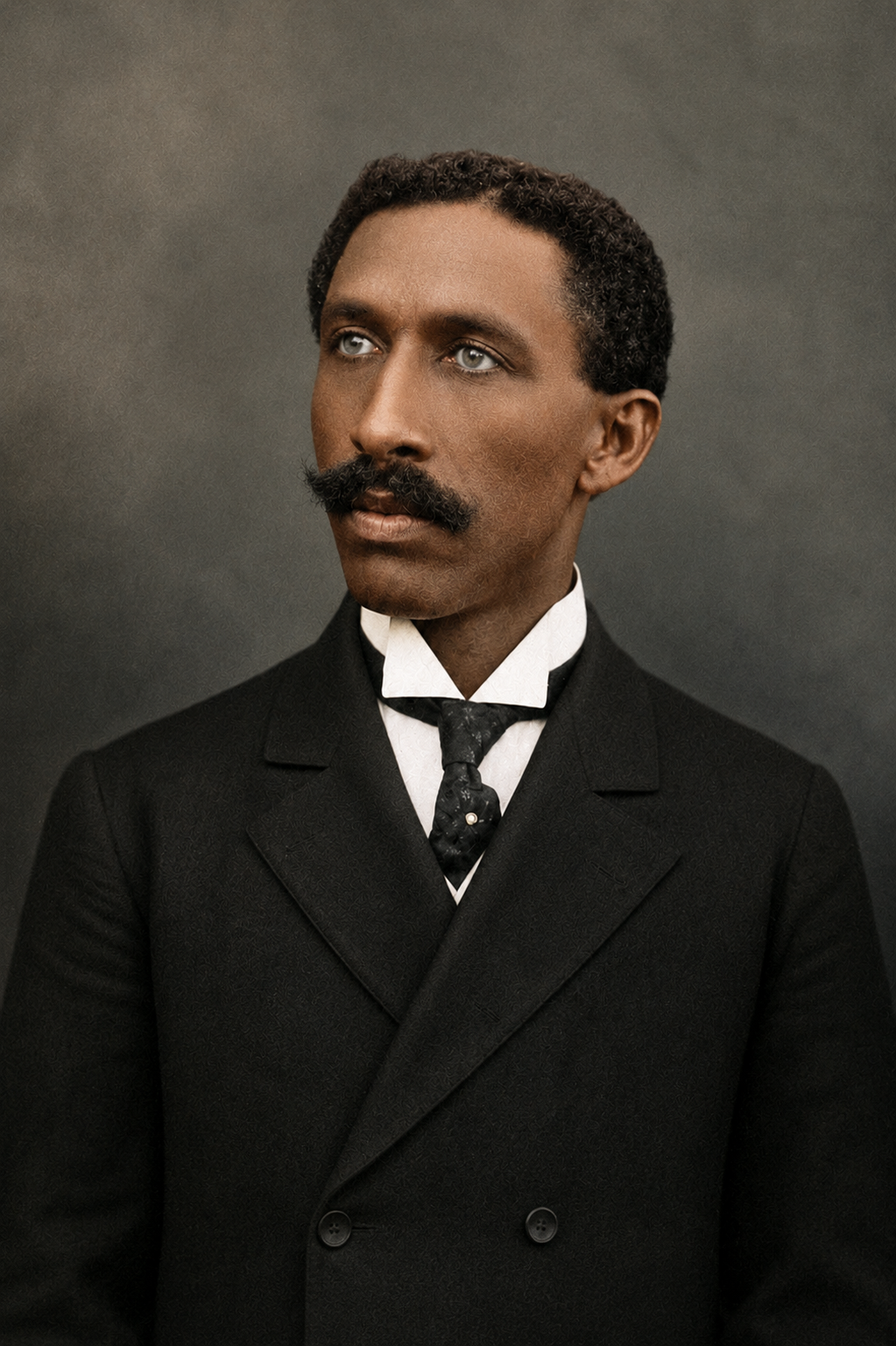
Dr. Sidney Dillon Redmond. AI-enhanced and colorized from the original portrait in Green Polonius Hamilton, Beacon Lights of the Race (1911), 137. Original public domain; AI enhancement by ChatGPT/OpenAI, 2026.
[Note: This is the first in a series of articles exploring the remarkable life and legacy of Dr. Sidney Dillon Redmond, one of the most accomplished Mississippi natives living in the late nineteenth and early twentieth centuries. Physician, educator, attorney, banker, businessman, Republican Party chairman, international traveler, and real-estate investor, Redmond built a life that intersected with some of the most important political and social developments of his era. Achieving all he did as an African American in Jim Crow Mississippi makes his story—and the people and places connected to it—far too extensive for a single article.]
Today, the name Sidney Dillon Redmond is most visibly preserved on a two-story brick building on North Farish Street that houses the famous Big Apple Inn and at the family vault in Greenwood Cemetery. But during his lifetime, Dr. S. D. Redmond was known far beyond Jackson. By the time of his death in 1948, contemporary newspapers were describing him as one of the nation’s wealthiest and most prominent African Americans.
His beginnings gave little indication of the extraordinary career that would follow.
Follow us on Facebook and Instagram
Sidney Dillon Redmond was born October 11, 1871, in Holmes County, Mississippi, the son of Charles and Esther Redmond, both formerly enslaved. His parents became sharecroppers after emancipation, and Sidney spent much of his childhood working on the family farm. According to biographical accounts, his access to education was so limited that he was thirteen before he learned to write his name and count. After his father died, the family sold their farm and moved to Holly Springs, opening an entirely different world to the young Redmond.
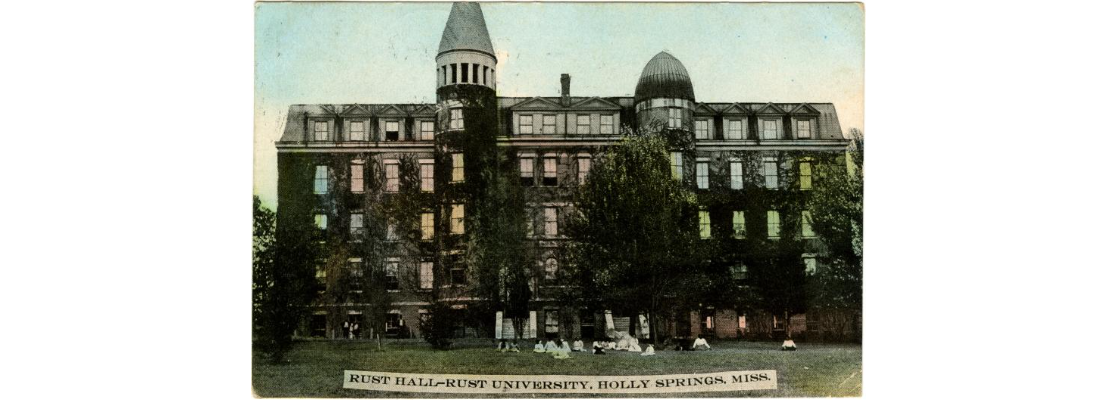
Rust University, Holly Springs, Mississippi. Historic postcard, date unknown. Cooper Postcard Collection, Mississippi Department of Archives and History.
There he enrolled at Rust University, today Rust College, one of Mississippi’s oldest historically Black colleges. Redmond graduated in the 1890s and began his professional career in education. He served as a school administrator and taught mathematics at Rust before deciding to pursue medicine. His studies took him north to the Illinois Medical College in Chicago, where he received his medical degree in 1897. He later pursued postgraduate medical study, including work associated with Harvard Medical School.
By 1898, Redmond had returned to Mississippi and established a medical practice in Jackson. Success was hardly guaranteed. A Black physician attempting to establish a practice in a city governed increasingly by segregation faced obstacles that had little to do with medical ability. Redmond reportedly struggled even to find suitable office space and housing. Ramsey Wharton, a white Jackson businessman who later became mayor and is also buried at Greenwood, helped him obtain professional space.
Redmond soon built a successful practice as both a physician and surgeon. He also became an important figure in the professionalization of Black medicine in Mississippi, helping organize the Mississippi Medical and Surgical Association and serving as its first president.
Medicine, however, was only one part of Redmond’s ambitions.
True to the Public Trust Since 1823
From Pulitzer Prize winners to those who served from the War of 1812 through WWII, Greenwood is a chronicle of sacrifice and success. Help us fund the research, tours, and preservation efforts that bring this history to life. Join us in honoring the depth and complexity of the Mississippi story.
Redmond began investing the money generated by his medical practice. He purchased houses, commercial property and interests in other businesses. A contemporary biographical account in Green Polonius Hamilton’s 1911 Beacon Lights of the Race described a man whose medical success had already been transformed into substantial business holdings.
Later scholarship documents the scale of Redmond’s investments. Historian Shennette Garrett-Scott found that Redmond owned more than 100 residential properties as well as two drugstores and other interests. Some later accounts put the number of houses much higher, but the contemporary and scholarly evidence already establishes that he became one of Jackson’s major Black property owners.
Banking became another important part of his career. In 1904, Redmond helped organize American Trust and Savings Bank, Jackson’s first Black-owned bank, and served as its president. Black-owned financial institutions were particularly important during segregation because African Americans frequently faced discrimination when attempting to borrow money or obtain other financial services from white-controlled institutions. Redmond therefore participated not merely as an investor but in the creation of an independent Black financial infrastructure in Jackson.
His success was especially notable because it occurred during the height of Mississippi's Jim Crow system. Farish Street and the surrounding neighborhood developed into the center of Black commercial and professional life in Jackson, with Black doctors, attorneys, merchants, bankers and tradesmen serving a community often excluded from white establishments. By 1908, one-third of the Farish Street district was Black-owned, and approximately half of its Black families owned their homes.
Do You Have More Information to Share?
Our historical research is never truly finished. Whether you have insights into our antique rose collection or stories of ancestors who rest here, your contribution helps Mississippi’s past come to life.
Redmond's personal life also connected him to an extraordinary chapter of Mississippi history.
His first wife was Ida Revels, whom he had known through Rust. Ida was no ordinary member of Mississippi society. Her father was Hiram Rhodes Revels, who in 1870 became the first African American to serve in the United States Senate.
Ida was accomplished in her own right. She was educated at Rust and worked as a teacher and women's organizer, participating in efforts centered on education, civic improvement and social service. Sidney and Ida had children who included Esther and Sidney Revels Redmond. Their son would eventually become an important attorney in his own right, extending the Redmond family's influence well beyond Mississippi.

Redmond Family Vault at Greenwood. Photo credit to FindAGrave and Natalie Maynor
Ida died in 1914 at only about forty-one years of age. She is buried in Jackson's historic Mount Olive Cemetery on the campus of Jackson State University. The Redmond vault at Greenwood shows her with a resting place but its most likely a sort of cenotaph but very unlikely she’s buried at Greenwood.
Redmond later married Johnnie Grace King, who became Johnnie Grace Redmond. The couple had daughters Ruth Grace and Linnie Naomi. Linnie died as a young child, while Ruth lived until 1999. Johnnie survived her husband by a decade, dying in 1958. The Redmond family story, like Sidney's own biography, would eventually connect several generations to education, law, civil rights and public life.
Health problems eventually made it difficult for Redmond to continue the demanding schedule of a physician and surgeon. Rather than retire, he changed professions.
He returned to Chicago to study law at the Illinois College of Law and returned to Mississippi as an attorney. His professional life increasingly centered on law, business and politics.
The transition was significant. There were very few Black attorneys practicing in Mississippi, and the legal system in which Redmond worked was itself deeply affected by racial discrimination. Nevertheless, he took on both civil and criminal cases and became involved in litigation that reached appellate courts.
Redmond's legal career was also contentious. He faced disbarment proceedings, contempt charges and accusations of professional misconduct. Some of those battles eventually reached the Mississippi Supreme Court. They reveal a complicated story involving professional ethics, political power, race and the treatment of Black attorneys within Mississippi's legal establishment.
That portion of Redmond's life deserves considerably more examination than can be given here.
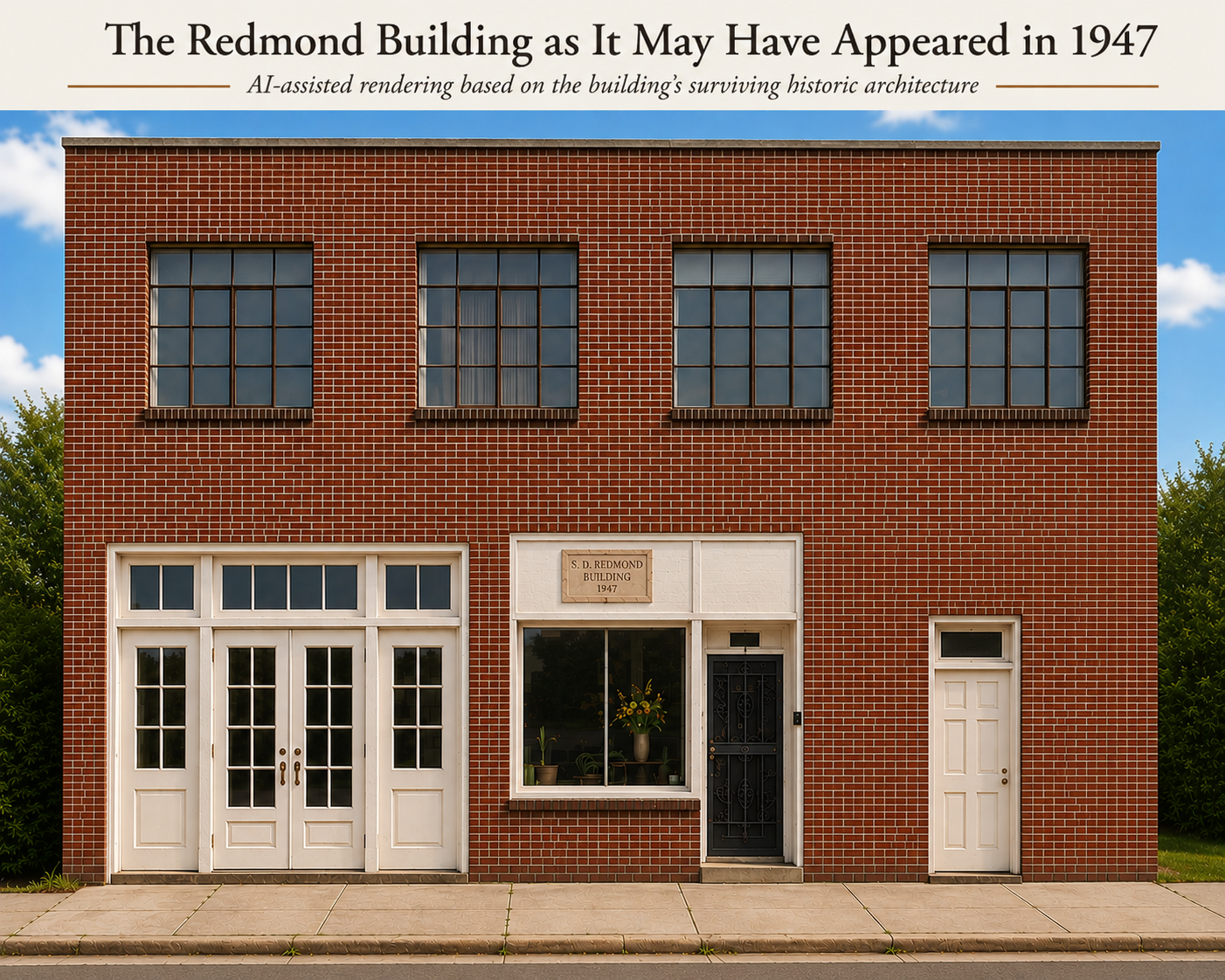
In the decades following Reconstruction, the Republican Party remained the principal avenue for Black political participation in Mississippi. Redmond became one of the state's most important Black Republican leaders and eventually chaired the Mississippi Republican State Executive Committee. The National Register of Historic Places nomination of the Redmond Building on Farish Street credits him with more than twenty-four years of leadership in the state party.
His involvement extended to national Republican politics. Records identify Redmond as a Mississippi delegate to Republican National Conventions in 1916, 1924, 1928, 1932, 1936, 1940 and 1944. In 1940, he served on the committee charged with formally notifying the party's presidential nominee.
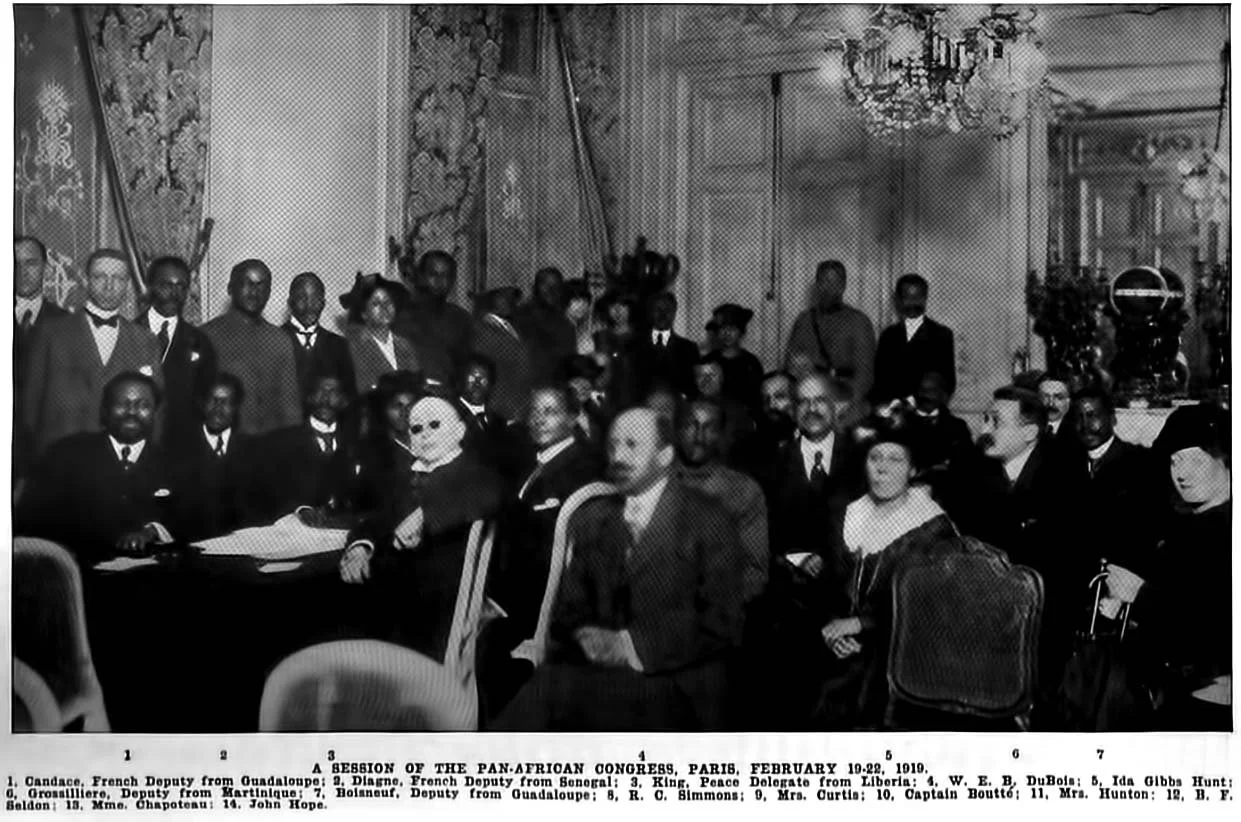
A session of the Pan-African Congress in Paris, February 19–22, 1919. Sidney Dillon Redmond traveled to Paris in connection with the Congress and the Paris Peace Conference. Photograph originally published in The Crisis, May 1919. Public domain, via Wikimedia Commons.
His interests extended beyond American politics.
In 1919, Redmond traveled to Paris in the aftermath of World War I. G. A. Sewell's Mississippi Black History Makers, identifies him as a delegate to the Pan-African Congress and as a correspondent covering the Paris Peace Conference, where representatives of the victorious Allied powers negotiated the postwar settlement.
The Pan-African Congress assembled Black leaders and intellectuals from the United States, Africa, the Caribbean and elsewhere to discuss colonialism, racial discrimination and the political future of people of African descent. Its best-known organizer was W. E. B. Du Bois.
For a Black Mississippian born only six years after the abolition of slavery to travel to Paris and participate in the international discussion over race and the postwar world is one of the more remarkable chapters of Redmond's biography.
It also demonstrates why simply describing him as a wealthy Jackson businessman misses much of the man.
He was born to formerly enslaved parents only six years after the Civil War ended. From that beginning, he obtained a college education and medical degree, became a successful surgeon, helped organize Black physicians, founded and led a bank, accumulated substantial property, became an attorney, led Mississippi Republicans, participated repeatedly in national presidential politics, and traveled to Paris amid the international political ferment following World War I.
And even that only begins to describe Sidney Dillon Redmond.
