The Murder of Dr. Locke Chew and the Legend of the Simms Dog
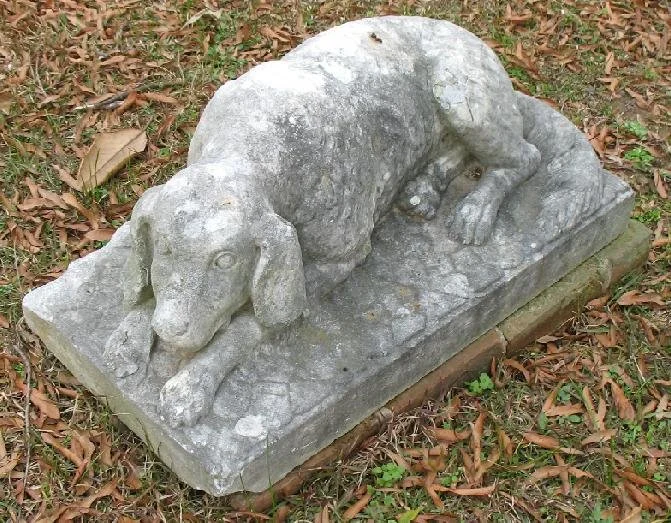
“Mamie” Simms’ dog - Photo from Find A Grave profile
In Greenwood Cemetery, there is a stone dog that never leaves its post.
It sits at the grave in the Simms family plot of a young girl named Mamie, watching—just as, according to local legend, the real dog once did. Day after day, it is said, the animal returned to lie on the grave of its young mistress until it died there itself. Generations have remembered the story. Visitors still stop to see it.
But also in the Simms plot lies another story—less visible, more violent, and just as bound to that same family.
It is the story of Dr. William Locke Chew.
Follow us on Facebook and Instagram
On a December night in 1889, in Birmingham, Alabama, a meeting of physicians ended in gunfire.
Within an hour, Chew—young, respected, and newly married—was dying.
________________________________________
He had every reason to expect a long career.
Born in May 1861 in Calvert County, Maryland, Chew was brought as a child to Mississippi, where his father planted in the Yazoo Valley. He was educated in Yazoo City and then at the University of Mississippi, graduating in 1882. From there, he went on to Tulane Medical College in New Orleans, where he distinguished himself enough to serve on the staff of Charity Hospital—an honor reserved for students of exceptional ability.
By 1886, he had settled in Birmingham, entering practice with Dr. B. M. Hughes. He quickly built a reputation. He was active in the Methodist Episcopal Church, South, served in the Jefferson County Medical Society, and held roles in local health administration.
He was, by every account, a young man on the rise.
On the night of December 10, the Jefferson County Medical Society met as usual in the rooms of the Young Men’s Christian Association.
There was nothing unusual about the meeting. Chew and another physician, Dr. John Daniel Sinkler Davis, even disagreed on medical points—but in good humor, as colleagues often did.
When the meeting ended around 10:15 p.m., the men stepped out into the night in small groups, talking as they went.
At the corner of Morris Avenue and Twentieth Street, Chew approached Davis.
“I want to talk with you a moment.”
They stepped aside.
What followed took only seconds. Words were exchanged. A blow was struck. Then came the flash of a pistol.
True to the Public Trust Since 1823
From Pulitzer Prize winners to those who served from the War of 1812 through WWII, Greenwood is a chronicle of sacrifice and success. Help us fund the research, tours, and preservation efforts that bring this history to life. Join us in honoring the depth and complexity of the Mississippi story.
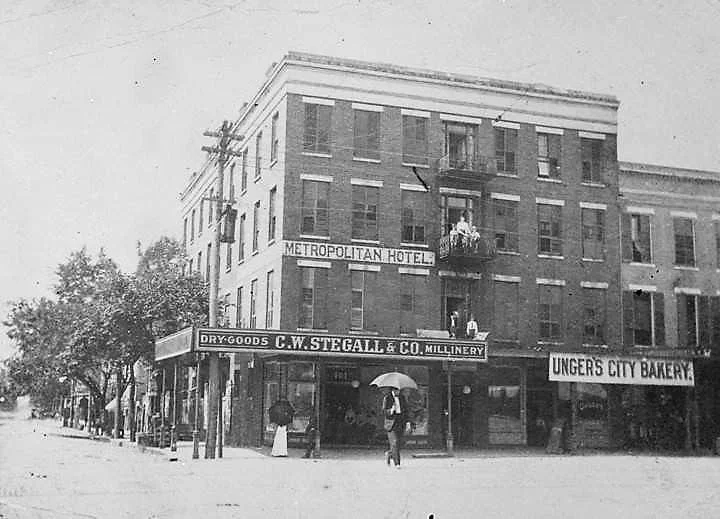
Metropolitan Hotel Birmingham, AL (Several unsuccessful attempts to find the correct citation)
Chew fell.
He was carried to the nearby Metropolitan Hotel, where doctors worked quickly, but they already knew what they were facing. The bullet had entered below the left nipple and traveled downward. The wound was fatal.
Still conscious, Chew understood.
Days earlier, he had examined Davis for an insurance claim. Their reports did not agree. Letters had followed—one of them, Chew said, insulting. That night, after the meeting, he had demanded an apology.
Davis refused.
“I attempted to punish him,” Chew said, “and he shot me.”
To those around him, he made another point just as clear: he had been entirely unarmed.
He tried to give a formal statement, but his strength failed before he could finish.
________________________________________
At his bedside was his wife, Annie.
They had been married only four weeks.
She knelt beside him, pleading for recognition—for one more word—but he could not answer. Those in the room watched as his pulse weakened, his breathing slowed, and the inevitable became clear.
At 11:21 p.m., less than two hours after the shooting, Dr. W. Locke Chew was dead.
________________________________________
The case that followed drew widespread attention.
Dr. Davis was arrested and brought to trial. The proceedings were closely watched, the arguments sharply contested. In the end, the jury returned a verdict of not guilty, accepting the claim of self-defense.
The law had reached its conclusion.
But the story did not end there.
Do You Have More Information to Share?
Our historical research is never truly finished. Whether you have insights into our antique rose collection or stories of ancestors who rest here, your contribution helps Mississippi’s past come to life.
Chew was first buried in Birmingham, but he would not remain there.
His final resting place would be Greenwood Cemetery in Jackson, Mississippi—and the reason lies with Annie.
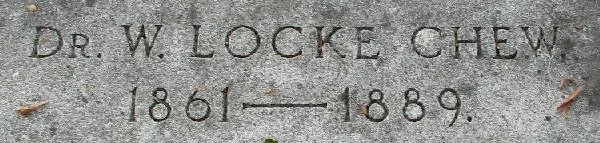
Find A Grave Profile - Greenwood Cemetery
Annie was a Simms.
Her grandfather, Collin Tarpley, had served as a justice of the High Court of Errors and Appeals, what we would today call the Mississippi Supreme Court. He is buried in Greenwood in the Simms plot, where his daughter Anne Simms (Annie and Mamie’s mother) is also buried.
It is Mamie whose grave is marked by the stone dog.
According to the story passed down over generations, the dog belonged to her. After her death, it returned each day to lie on her grave, remaining there in quiet loyalty until its own death. Whether legend or memory, the image endured—and the monument still stands.
Through that same family plot—through Tarpley, through Mamie, through the Simms line—Chew’s story was drawn into Greenwood.
He was reinterred there, not because of his career in Birmingham, but because of the family he had married into.
________________________________________
Annie herself would go on.
She later married John Plummer Tillman, a prominent Alabama attorney and participant in the state’s constitutional convention movement around 1900. She and John would have several children (believed to be adopted) and lived the rest of her life in Birmingham, where they are both buried. When Annie died in 1950, the entire Birmingham Bar Association served as honorary pallbearers.
________________________________________
Chew’s life was brief. He was only twenty-eight years old, standing at the beginning of what promised to be a distinguished career.
His death was sudden, public, and violent.
But in Greenwood Cemetery, his story is quieter.
There, among the Simms family, and within sight of a stone dog that still keeps watch, the memory of Dr. William Locke Chew endures—not just as a victim of a tragic night, but as part of a larger story of family, loss, and remembrance.
