From Pennsylvania to Buena Vista to Savage’s Station to Greenwood: The Griffith Family Story
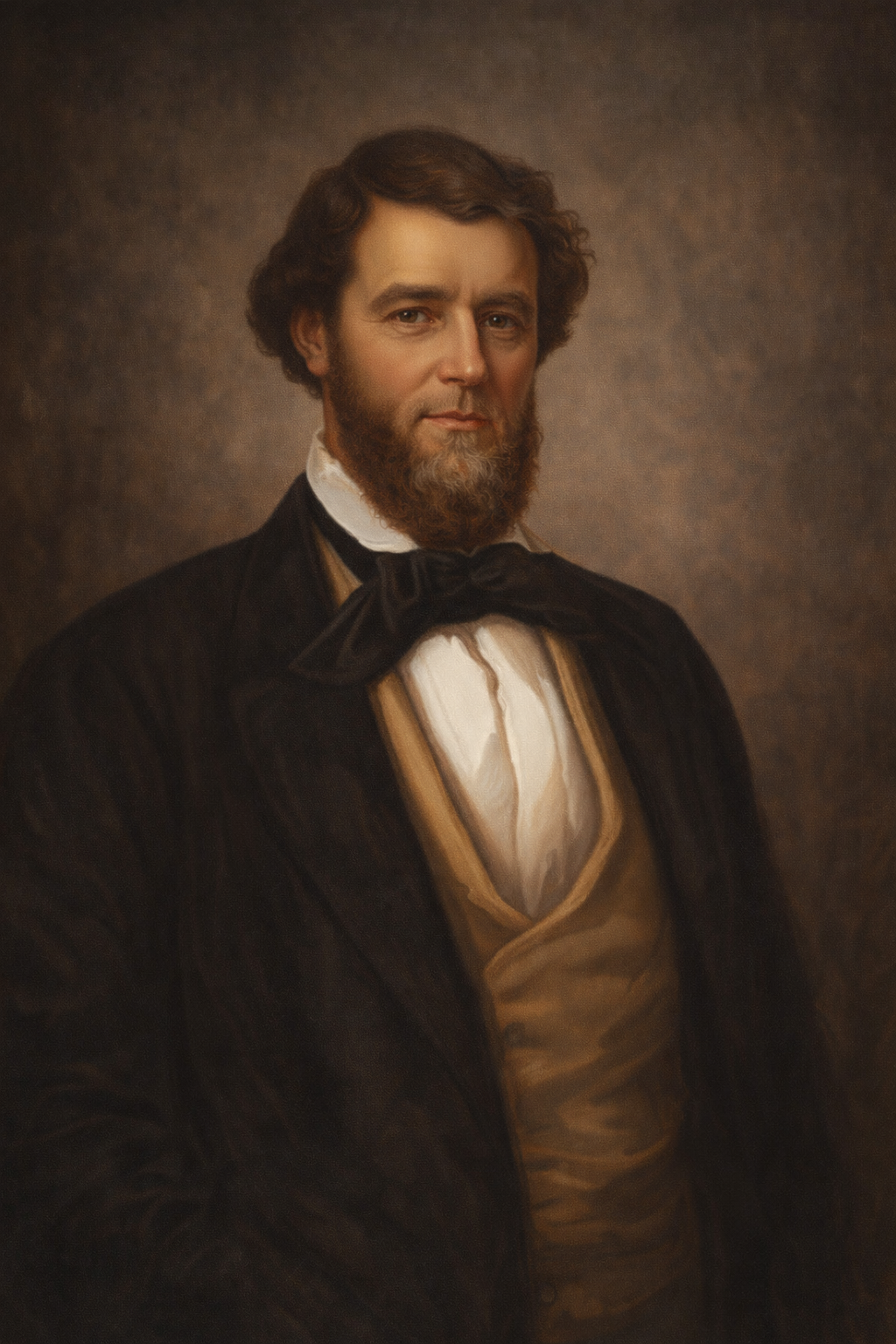
Gen. Richard Griffith. Original image: Mississippi Hall of Fame portrait. Public domain. AI-assisted reconstruction (colorization and enhancement) by the author.
Richard Griffith is one of those men who seems to stand just offstage in Mississippi history.
He was never as famous as his contemporaries Jefferson Davis or Governor/Congressman John Quitman, but he moved in their world. He was a Mexican War veteran, the Democratic state treasurer, the Southern District U.S. Marshal, and finally a Confederate brigadier general who died in battle in 1862. And if that were the whole story, he would still be worth remembering.
Follow us on Facebook and Instagram
But Griffith’s life opens into something larger. Through marriage, politics, war, and family, he became part of a network that reached into Mississippi College, Baptist institutional life, banking, medicine, and city leadership throughout the South. Follow the Griffith family long enough and you move from Buena Vista to Savage’s Station, from the Confederate army to Kansas City surgery rooms, and from state politics to Vicksburg banking.
That makes Richard Griffith more than just another fallen general. He becomes a window into how one family could help shape Mississippi across generations.
True to the Public Trust Since 1823
From Pulitzer Prize winners to those who served from the War of 1812 through WWII, Greenwood is a chronicle of sacrifice and success. Help us fund the research, tours, and preservation efforts that bring this history to life. Join us in honoring the depth and complexity of the Mississippi story.
A Pennsylvanian Who Became a Mississippian
Richard Griffith was born near Philadelphia, Pennsylvania, on January 11, 1814. That matters, because later accounts sometimes blur the point and make him sound like a native Mississippian from the beginning. He was not. He came south, like many ambitious young men of his generation, and made his life in Mississippi.
Some accounts suggest he studied at Ohio University in the late 1830s, though the records are not definitive, he settled in Mississippi, where he first worked as a teacher before moving into law, politics, and public life. By the 1840s he was clearly established in Warren County and especially in Vicksburg’s political circles. One contemporary newspaper described him as long a resident of the county and said that no man was more beloved and respected there.
That kind of praise could be exaggerated in campaign season, but in Griffith’s case it seems to reflect something real. He was the sort of man who inspired confidence. One endorsement for his nomination as state treasurer praised his “spotless integrity,” “amiability of life,” and business qualifications. Those phrases tell us as much about the political ideals of the time as they do about Griffith himself: competence, honor, and reputation still mattered, or at least had to be claimed publicly.
Do You Have More Information to Share?
Our historical research is never truly finished. Whether you have insights into our antique rose collection or stories of ancestors who rest here, your contribution helps Mississippi’s past come to life.
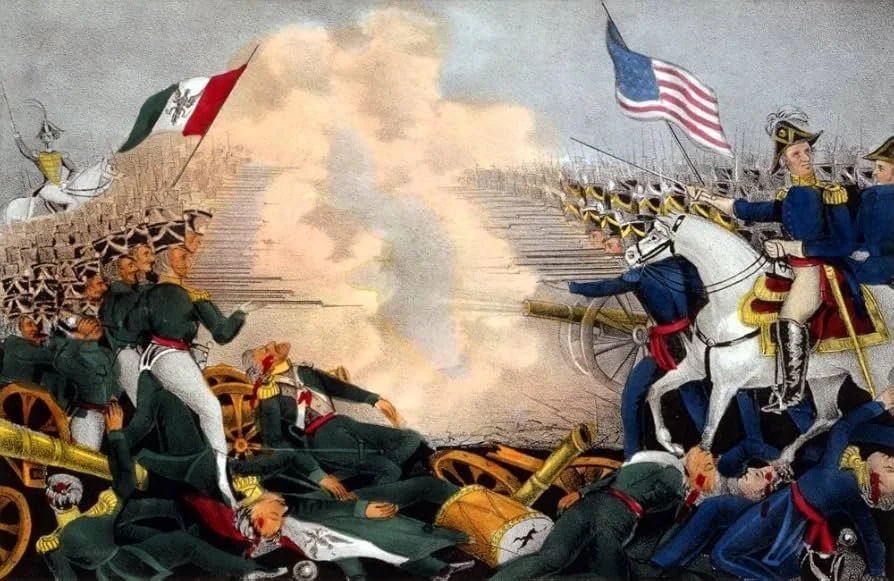
Carl Nebel, Buena Vista—Charge of the Mississippi Rifles (1847). Lithograph from The War Between the United States and Mexico Illustrated. Public domain, via Library of Congress.
Buena Vista and the Making of His Reputation
Long before the Civil War, Griffith had already been tested in war.
During the Mexican War he served with the Vicksburg Southrons, one of Mississippi’s volunteer companies, and became a second lieutenant. More than that, he served as acting adjutant of the regiment, which meant responsibility, organization, and trust. This was not a ceremonial job. An adjutant helped keep the machinery of a volunteer regiment working in the middle of a campaign.
At the Battle of Buena Vista on February 23, 1847, Griffith was listed as “2d Lieut., acting Adjt of Regt.” That battle was one of the hardest-fought engagements of the war. Zachary Taylor’s much smaller American army faced a far larger Mexican force under Santa Anna in northern Mexico. For a time the fighting was severe and uncertain, and units from Mississippi saw real action under punishing conditions. The Vicksburg Southrons suffered casualties there, with men killed and wounded in the field.
That matters because Buena Vista was not just another campaign ribbon. It was the kind of battle that made reputations. Griffith emerged from the Mexican War not simply as a veteran, but as a man associated with discipline, leadership, and reliability. One newspaper later recalled that he had been among the first in his area to volunteer and credited him with helping lay the early discipline and drill that gave the regiment its strength. The same notice said he had won the affection of the men and the approval of the officers.
And then there was the Jefferson Davis connection.
Griffith served in the 1st Mississippi Rifles under Davis, and later notices explicitly stressed that he had been confirmed in office by “the quick penetration of a Davis.” That line is pure nineteenth-century newspaper rhetoric, but the point is clear enough: Griffith had earned the confidence of one of the most important men in Mississippi politics. That relationship would matter later.
From War Hero to State Treasurer
The transition from Mexican War officer to state politician happened quickly.
In 1847, when a vacancy opened on the Democratic state ticket after W. J. Austin declined the nomination for treasurer, Griffith’s name surfaced almost immediately. Newspaper notices urged his selection. Then the Democratic nominating committee met in Jackson and voted unanimously for “Richard Griffith of Warren” as the candidate for State Treasurer. Another convention notice soon listed him on the Democratic state ticket alongside John A. Quitman for governor.
That tells us a lot. Griffith was not a marginal figure who happened to drift into office. He was a rising Democratic leader whose military service, public image, and political acceptability made him a strong statewide candidate.
He would go on to hold important public posts, including service as State Treasurer and later as United States Marshal for the Southern District of Mississippi. The marshal record is especially revealing. He appears in the federal roster as appointed in 1853, reappointed in 1857, and again in 1858. That means Griffith was trusted under the Democratic administrations of Franklin Pierce and James Buchanan. In other words, he was not only a Mississippi Democratic figure; he was part of the broader Democratic patronage system of the 1850s.
That makes sense. By then, Griffith was already tied to Jefferson Davis’s world by shared war service and Mississippi politics. And undoubtedly Davis’ tenure as Secretary of War under Pierce held a great deal of sway for the appointment.
Marriage into the Whitfield Family
In 1850, Richard Griffith married Sarah Ann Eliza Whitfield, usually called Sallie, daughter of Benjamin Whitfield of Hinds County.
This was a major alliance.
Benjamin Whitfield was one of the significant Baptist lay leaders of early Mississippi. He was deeply connected to the development of Mississippi College and integral to MC’s becoming under Baptist control. He was not simply a pious local notable. He belonged to that founding generation that helped build Mississippi’s religious and educational infrastructure. Father Benjamin served on the Board of Trustees for many years as did many more Whitfields.
So when Griffith married Sallie Whitfield, he married into a family with real influence and long institutional reach. He was already a man of political promise; the Whitfield connection tied him to a prominent religious and educational network as well.
That part of the story matters because the Griffith family that emerged from this marriage would continue to matter in Mississippi for decades.
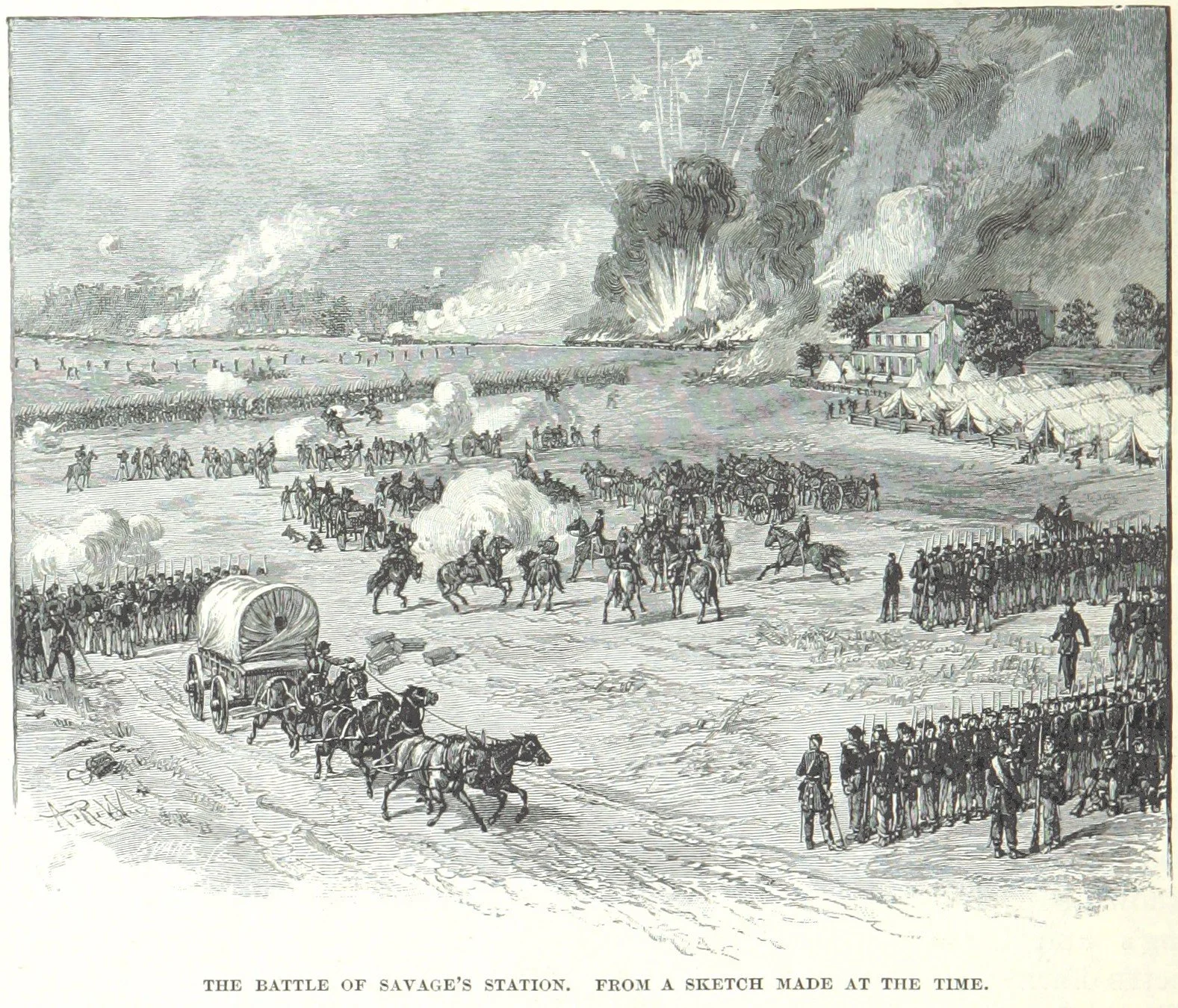
Currier & Ives, Battle of Savage’s Station, Va., June 29, 1862 (1862). Lithograph. Public domain, via Library of Congress.
When Civil War Came
By 1861, Griffith had already been a soldier, politician, banker, and federal officeholder. He was not a young unknown entering war for the first time. He was a seasoned public man with experience, connections, and standing.
When Mississippi seceded, he aligned himself with the Confederacy and became colonel of the 12th Mississippi Infantry. Later he was promoted brigadier general on November 12, 1861. His brigade was made up largely of Mississippi regiments, which gave it a strong state identity and ensured that Griffith was once again leading men drawn from the same broader Mississippi world in which he had built his career.
In the shifting command arrangements of the early war, Griffith’s brigade served within the Army of Northern Virginia and came to be associated during the Peninsula Campaign with John B. Magruder’s division. The larger Confederate high command was still finding its footing in 1862, and officers like Griffith operated in a world of changing assignments, imperfect coordination, and increasingly brutal combat.
Savage’s Station and the End of His Career
If Buena Vista helped make Richard Griffith’s reputation, Savage’s Station ended his life.
The Battle of Savage’s Station on June 29, 1862, came during the Seven Days Battles as George B. McClellan’s Union army retreated from the outskirts of Richmond toward the James River. It was part rear-guard fight, part confused pursuit, and like many Civil War engagements, it was shaped as much by miscommunication as by deliberate planning.
Griffith’s brigade went into action as part of the Confederate effort to strike McClellan’s retreating forces. The fighting was difficult, the field situation murky, and support uneven. In the midst of that action, Griffith was hit by artillery fire and mortally wounded.
That detail is worth slowing down for. He was not killed in some abstract staff role miles from danger. He died as a field commander in the thick of an advancing fight. Savage’s Station was not among the war’s most famous battles, but for Griffith it was decisive. His Confederate career, and really the final chapter of his public life, ended there.
He died later from the wound and Davis took Griffith’s death hard. His body was brought to Richmond, where funeral services were held at the Confederate White House—an unusual honor that reflected just how much he was valued. He was eventually buried in Greenwood Cemetery.
That left behind not just the memory of a fallen general, but a widow, children, and a family network that would continue to matter long after he was gone.
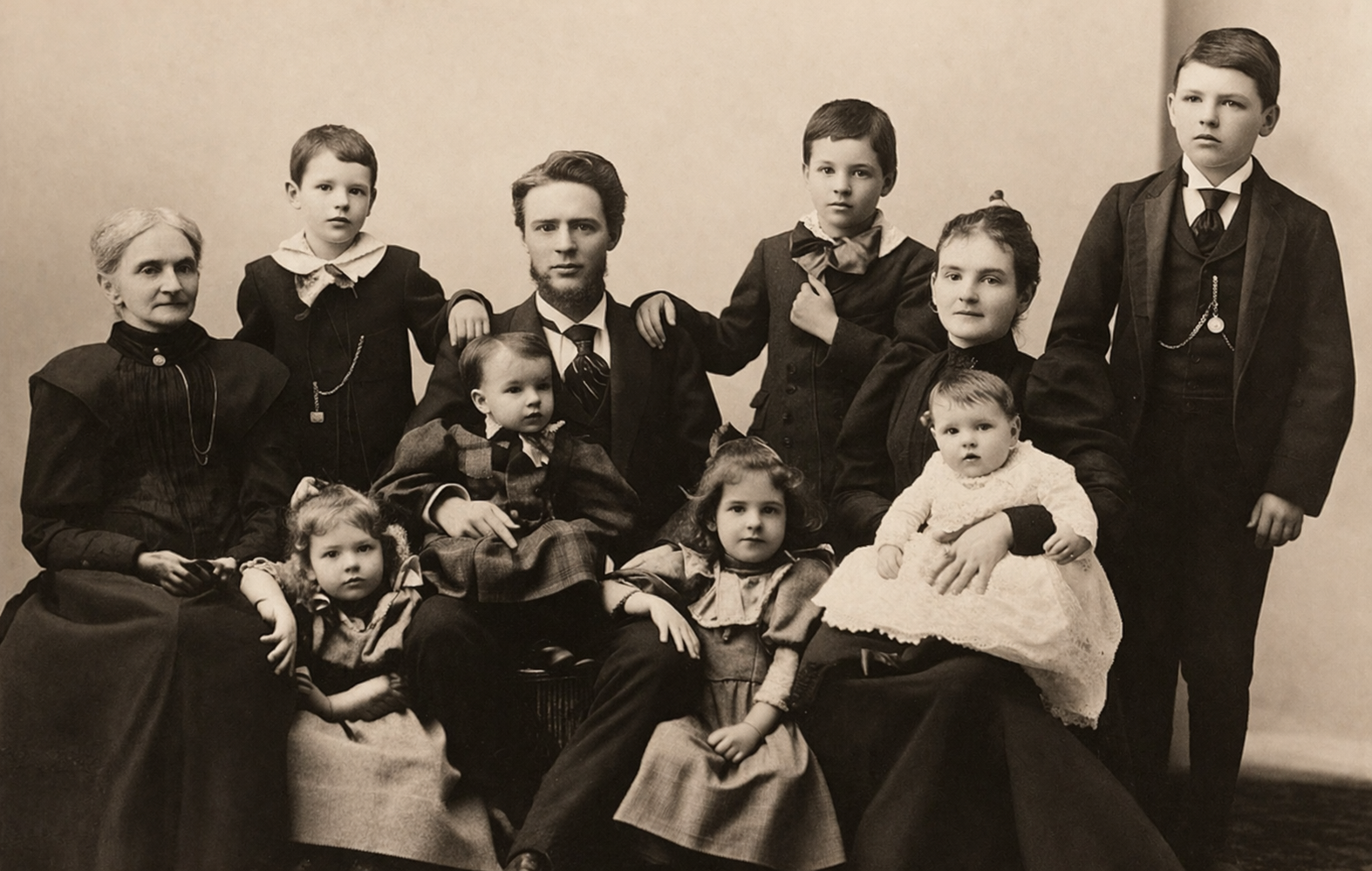
Sallie Whitfield Griffith Baley on the far left with BH Griffith and wife Cora and their seven children. From Wikimedia Commons and enhanced by AI
A Widow, a few Mayors, and a Very Strange Family Turn
After Richard Griffith’s death, his widow Sallie remarried Stephen P. Baley, a prominent Jackson merchant who later served as mayor of the city.
That by itself would simply be another example of how Civil War widows rebuilt their lives.
But the story gets more unusual.
Griffith’s daughter Lucy later married Henry Baley, Stephen Baley’s son all of who are buried at Greenwood. Sallie is buried next to Richard but close by the impressive Baley monument.
So yes, the family ended up with a mother and daughter marrying a father and son.
It sounds like the sort of thing a novelist would invent, but it appears in the family record. More importantly, it shows how tightly interwoven elite family networks could become in postwar Mississippi. Political prominence, business standing, family connection, and local leadership often circulated within a relatively small set of households.
The Sons: Why the Story Doesn’t End with Richard Griffith
His sons became prominent men in their own right.
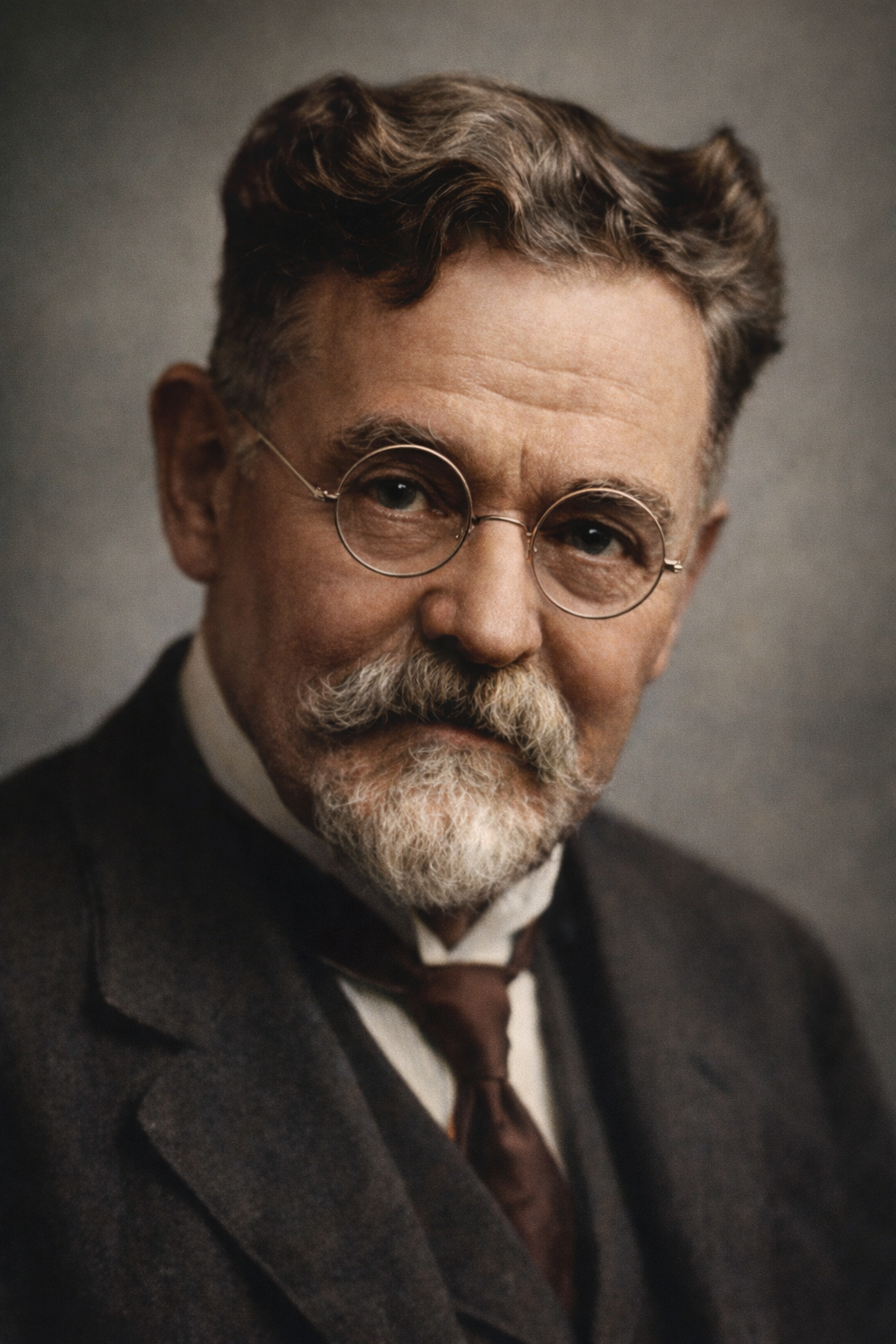
Dr. Jefferson Davis Griffith. Original image: historical newspaper halftone photograph (late 19th/early 20th century). Public domain. AI-assisted reconstruction (enhancement and interpretation) by the author.
One son, Jefferson Davis Griffith, was born in Jackson in 1850. He later moved west and built an impressive career in Kansas City as a surgeon. By the time of his death, he had become one of the city’s leading medical figures, associated for decades with St. Joseph Hospital. His obituary described him as chief of the hospital’s surgical staff, a nationally respected surgeon, and a figure active in military medicine, the Missouri National Guard, the Spanish-American War, and World War I–era medical service. He belonged to a long list of medical associations and was remembered as a mentor to younger physicians.
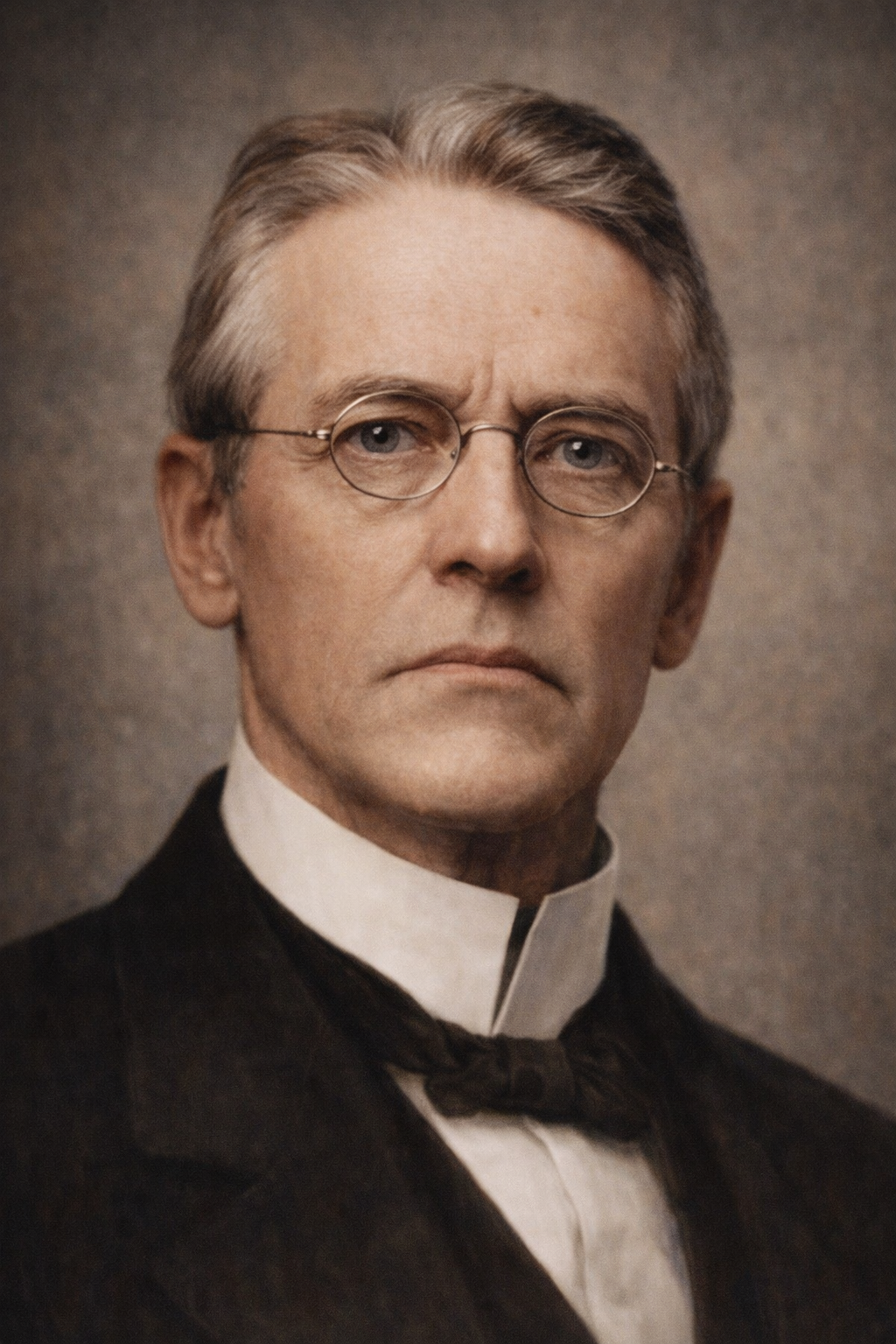
Benjamin Whitfield Griffith (B. W. Griffith). Original image: historical photograph (likely newspaper or local archival source). Public domain. AI-assisted reconstruction (enhancement and interpretation) by the author.
Another son, Benjamin Whitfield Griffith, usually called B. W. Griffith, became one of Vicksburg’s most respected businessmen and civic figures. His obituary is especially valuable because it looks backward and preserves family memory. It recalls his father’s Mexican War service under Jefferson Davis and presents B. W. Griffith as part of a large and successful Mississippi family.
B. W. Griffith taught for a time, even serving in the math department at Mississippi College, then studied law, but eventually found his real career in banking. He became associated with the Capital State Bank and later moved to Vicksburg, where he became president of the First National Bank. He remained a major banking figure there for decades, eventually serving as chairman of the board. He also became a leading Baptist layman, was deeply involved with the Mississippi Bankers’ Association, and maintained a long and significant connection with Mississippi College as student, faculty member, treasurer, trustee, and board president. Mississippi College later honored him with an LL.D.
He even served as mayor of Vicksburg for several years, though his obituary insisted he never really sought office and accepted it more out of duty than ambition.
So Richard Griffith’s sons carried the family name into two very different but equally prominent worlds: medicine and banking.
One son became a notable surgeon in Kansas City. Another became a banker, civic leader, Baptist layman, mayor, and Mississippi College figure in Vicksburg. That is not a minor family legacy. That is a family that remained visible and influential long after the Civil War generation had passed.
Why Richard Griffith Matters
Richard Griffith is easy to overlook because he died relatively early in the Civil War and because more famous Mississippi names crowd the field around him. But once you put the pieces together, he becomes much more interesting.
He was a Pennsylvanian who came south and became fully embedded in Mississippi life. He won distinction in the Mexican War at Buena Vista. He turned military reputation into political success. He rose through the Democratic ranks and held both state and federal office. He married into one of Mississippi’s important Baptist families. He entered Confederate service and died at Savage’s Station. And his children went on to become prominent figures in banking, education, religion, city leadership, and medicine.
That is a much richer story than the standard one-line identification of “Confederate general.”
It is really the story of a nineteenth-century white Mississippi family in motion—through war, politics, institutions, and memory.
Author’s Note: This article was written by the author with the assistance of AI tools. The author directed the research, structure, and interpretation of the material, and has edited and reviewed the final content for accuracy and clarity.