From Monument Street to a National Movement: The Story of Henry and Fannie Thomas
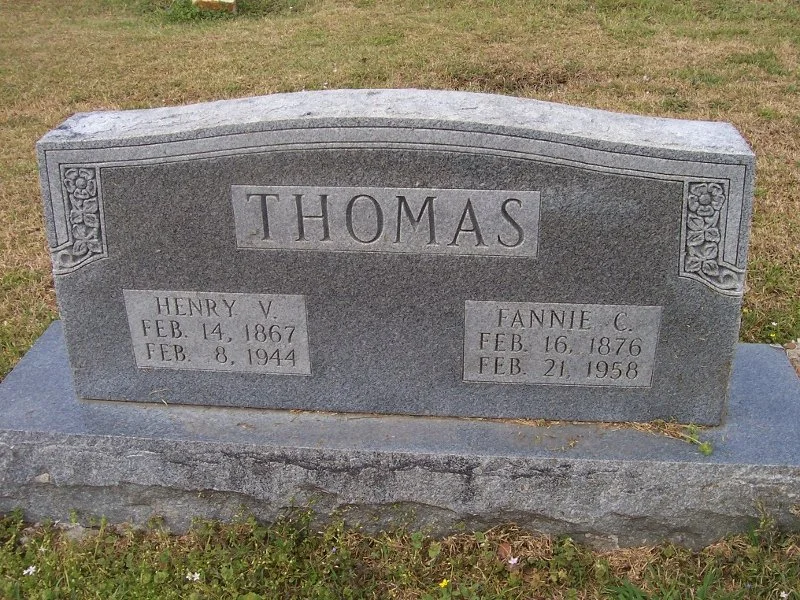
Thomas monument from FindAGrave
There was a time in Jackson when some of the city’s most important moments passed quietly through a greenhouse on Monument Street.
At 210 Monument Street, Henry and Fannie Thomas built a life together that was “rooted” in work, faith, and community. Their business was flowers, but their work reached far beyond that. For years, they supplied arrangements for churches, celebrations, and, most often, funerals—those solemn moments when families gathered to say goodbye and needed something beautiful to mark the occasion.
They were not simply florists. They were part of the rhythm of the city.
Follow us on Facebook and Instagram
Henry Thomas was born in Georgetown in Copiah County and came to Jackson as a young man, eventually establishing a greenhouse operation with the help of his wife. This was not a small undertaking. A greenhouse required space, skill, and constant labor. It meant tending plants in every season, anticipating demand, and maintaining a steady supply of fresh flowers in a time when distribution networks were limited.
Fannie was central to it all. Like many women in family businesses of the era, her role was essential, even if it was not always formally recognized. She certainly helped manage the operation, worked with customers, and ensured that the Thomases’ reputation for quality and reliability continued year after year. By the time their names appeared in print, they were remembered as operating one of Jackson’s oldest and most successful florist businesses.
Their work placed them at the heart of one of the most meaningful aspects of community life: remembrance. In an era before modern funeral industries took shape, florists like the Thomases were indispensable. It is difficult to count how many families in Jackson turned to them in times of grief, but the record suggests it was many.
Henry’s own funeral gives a sense of how deeply he was connected. When he died in 1944 at the age of sixty-nine, services were held at Farish Street Baptist Church, one of the most important institutions in Jackson’s African American community. The setting was fitting. The church stood at the center of a network of relationships that shaped daily life—religious, social, and economic—and Henry Thomas had long been part of that world.
Yet his life extended beyond Monument Street and beyond the greenhouse.
True to the Public Trust Since 1823
From Pulitzer Prize winners to those who served from the War of 1812 through WWII, Greenwood is a chronicle of sacrifice and success. Help us fund the research, tours, and preservation efforts that bring this history to life. Join us in honoring the depth and complexity of the Mississippi story.
At some point in the 1930s, Henry Thomas became involved in a national organization known as the National Negro Congress. His obituary noted that he was among the early members of its board, a detail that places him within a much larger story unfolding across the country.
The National Negro Congress was formed during the Great Depression, at a time when African Americans faced not only the entrenched realities of segregation but also widespread economic hardship. It was an ambitious effort to bring together Black leaders from across different fields—ministers, labor organizers, business owners, and intellectuals—into a single coalition. The goal was simple in concept but difficult in practice: to improve the lives of Black Americans through coordinated action.
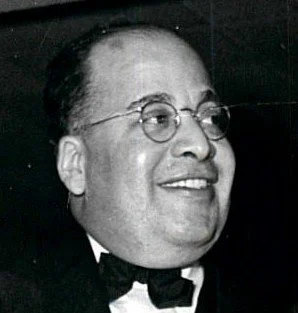
John P. Davis, photograph. Wikimedia Commons. Public domain. Used via the John P. Davis entry on Wikipedia
One of the central figures behind the organization was John P. Davis, a lawyer and organizer who believed that real change required unity. Davis worked to create a structure that could connect local communities to a national movement. Through conventions, local councils, and governing boards, the National Negro Congress attempted to give shape to a shared effort—linking people in cities like Jackson to conversations and strategies unfolding far beyond their immediate surroundings.
Another major figure associated with the organization was A. Philip Randolph, already well known for his leadership of the Brotherhood of Sleeping Car Porters. Randolph had built one of the first successful Black labor unions in the United States, representing railroad porters and maids who had long endured low wages and difficult working conditions. His involvement in the Congress brought a strong emphasis on labor rights and economic justice, expanding the organization’s focus beyond politics alone.
But the National Negro Congress was also shaped by the political realities of the 1930s in another important way. It drew significant support from individuals connected to the Communist Party USA and other left-leaning movements. During this period, Communist organizers were among the most active advocates for racial equality, labor rights, and anti-lynching legislation, and they played a visible role within the Congress’s organizing efforts.
This gave the organization both strength and tension. On the one hand, it brought energy, resources, and a willingness to confront racial injustice directly. On the other, it created internal divisions over ideology and control. Randolph himself grew increasingly concerned about Communist influence within the organization and eventually withdrew, reflecting broader disagreements about the direction of Black political activism during this period.
By the early 1940s, these tensions contributed to the Congress’s decline. Yet its impact remained significant. It helped lay groundwork for the more widely recognized civil rights efforts that would follow in later decades, and it demonstrated the possibilities—and the challenges—of building broad coalitions for change.
Somewhere within that national network was Henry Thomas.
Do You Have More Information to Share?
Our historical research is never truly finished. Whether you have insights into our antique rose collection or stories of ancestors who rest here, your contribution helps Mississippi’s past come to life.
We do not have a record of the speeches he may have made or the meetings he attended. What we do have is enough to understand the kind of man he was. He was a business owner who had earned the trust of his community. He was connected to his church and respected across social lines. And he was willing to take part in something larger than his own immediate circumstances.
That combination mattered.
When his obituary noted that he had “many friends, both colored and white,” it captured something that cannot easily be measured but is often the truest indicator of a life’s impact. It suggests a man who moved through the boundaries of his time with a degree of respect that was not easily given in the segregated South.
After Henry’s death in 1944, Fannie Thomas carried that legacy forward for more than a decade. She lived until 1958, spanning a period of profound change in the South. By the time of her passing, the early stirrings of the modern Civil Rights Movement were beginning to take shape—movements that built, in part, on the kinds of local leadership and national connections that had defined her husband’s generation.
She was remembered not only as his wife, but as his partner in a business that had served Jackson faithfully for many years. Her life bridged two eras: the world of Jim Crow in which the business was built, and the emerging struggle that would begin to dismantle it.
Together, Henry and Fannie Thomas represent a kind of history that is easy to overlook. They were not politicians or national figures in the usual sense. Their names do not appear in textbooks. But their lives intersected with the essential structures of their time—church, business, community, and even national movements for change.
Their greenhouse on Monument Street is gone now, but its presence can still be felt in the stories that remain. In the flowers they provided, in the funerals they helped mark, and in the quiet civic work that connected them to a larger struggle, they left behind a legacy that is both local and far-reaching.
It is the kind of story Greenwood Cemetery was made to remember.
