Professor W.H. Lanier: Architect of Jackson’s Black School System
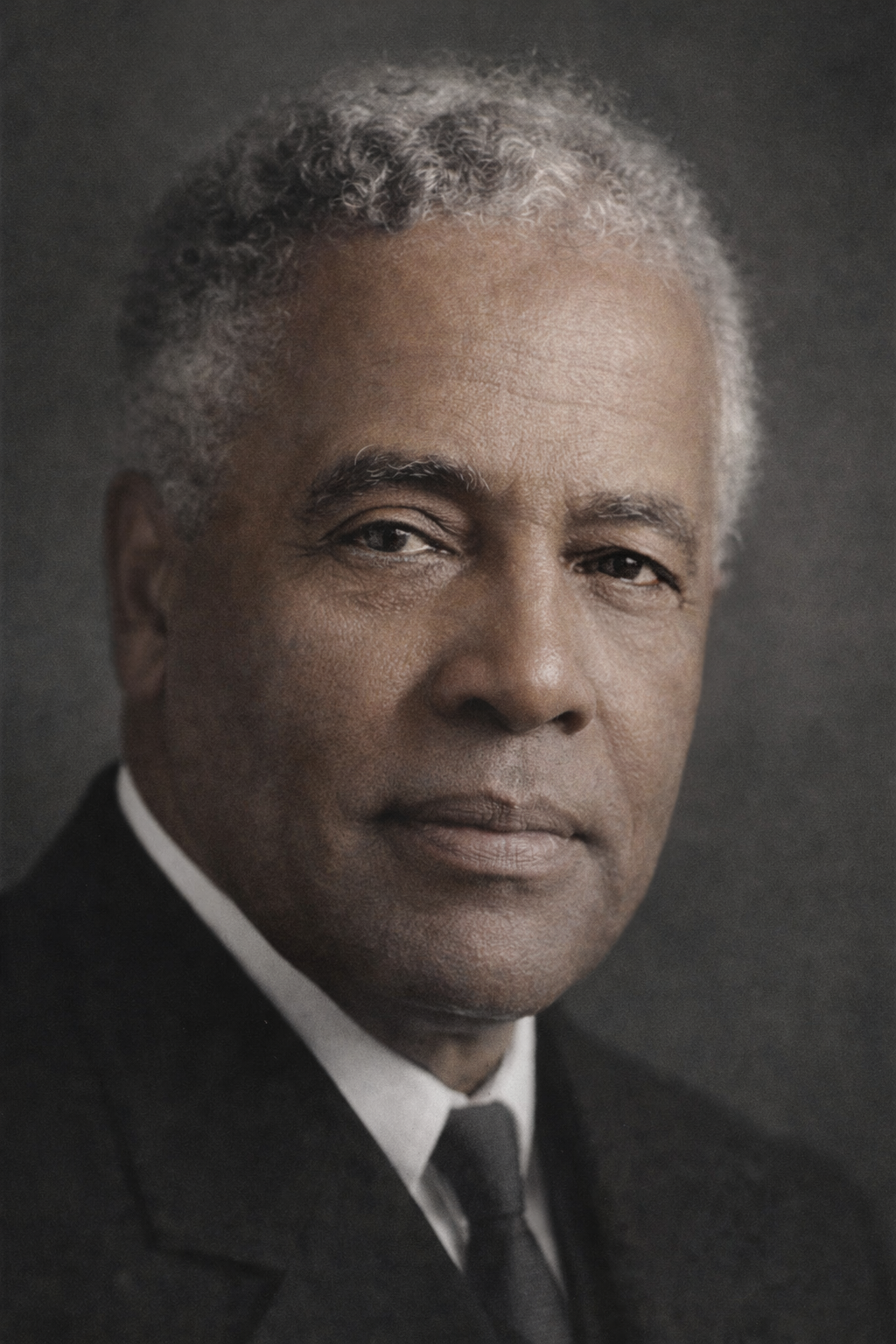
AI Generated picture taken from Clarion Ledger July 13, 1971
By Nick Walters
Follow us on Facebook and Instagram
Educator, Administrator, and a Founding Father of Black Public Education in Jackson
William Henry Lanier was among the most consequential African American educators in Mississippi during the late nineteenth and early twentieth centuries. Born enslaved in Alabama around 1851, Lanier rose to become a college president, long-serving supervisor of Black public schools in Jackson, and the namesake of the city’s first four-year Black high school. His career reflects both the possibilities and the tensions that shaped Black educational leadership in the post–Civil War South.
True to the Public Trust Since 1823
From Pulitzer Prize winners to those who served from the War of 1812 through WWII, Greenwood is a chronicle of sacrifice and success. Help us fund the research, tours, and preservation efforts that bring this history to life. Join us in honoring the depth and complexity of the Mississippi story.
Birth and Early Life: An Uncertain Beginning
The surviving sources do not agree on the precise place of Lanier’s birth—a reminder of the fragmentary nature of records for enslaved people. Contemporary obituaries published at the time of his death in 1929 state that Lanier was born near Selma, Alabama, “of slave parents,” around seventy-eight years earlier. A later retrospective article, written decades afterward as part of a commemorative series on Jackson’s Black schools, instead reports that he was born enslaved in Huntsville, Alabama, and carried as a small child to Autaugaville a few miles west of Prattville and one county over from Selma.
Both accounts may reflect different aspects of the same early experience: birth on a plantation near Selma followed by childhood movement within northern Alabama. Given the lack of formal birth documentation for enslaved children, and the greater evidentiary weight typically accorded to contemporaneous obituaries, this sketch follows the obituary accounts while acknowledging the later Huntsville tradition as part of Lanier’s remembered early life.
Education and Formation
What is clear is that Lanier’s early life was marked by a powerful determination to obtain an education. Around 1870, as a young man, he ran away in search of schooling and worked his passage by steamboat to Selma. There he found support through mission-sponsored institutions and entered Selma’s Burrell Academy in 1871, later describing himself as “a product of the American Missionary Association” which was the Academy’s sponsoring organization.
Lanier pursued education with uncommon persistence. His studies took him through Talladega College in Alabama (also an American Missionary Association institution), at our own Tougaloo, and later to Oberlin in Ohio and Fisk in Nashville, TN. He eventually earned a degree from Roger Williams University in Bristol, Rhode Island. It should be noted that many smaller, privately-funded colleges in the South that accepted African Americans often found it hard to keep their doors open so “bouncing from one college to another” shouldn’t be attributed to any of Professor Lanier’s ability to study.
There is some evidence to suggest his biological father was Dr. Isaac Lanier who was born in Huntsville and practiced medicine in Autaugaville. It would explain how a young man born into slavery was able to attend so many higher educational institutions.
During his student years he experienced a Christian conversion in 1878 and became deeply committed to Sunday School work, even helping organize river crossings to bring instruction to children in rural Alabama. Faith and education remained closely linked throughout his life.
Teacher, Administrator, and College President
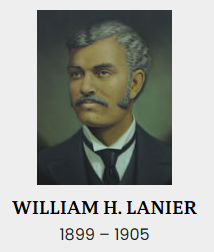
Image from Alcorn State University website
Lanier’s professional career unfolded across Mississippi and Alabama, following a path typical of elite Black educators of his generation. He taught and administered schools in multiple Mississippi communities, including Forest, Winona, Black Hawk, Carrollton, Yazoo City, and Jackson. By the late 1890s, he was widely regarded as one of the state’s most capable African American educators.
In 1899, Lanier was elected president of Alcorn Agricultural and Mechanical College after a competitive search that drew over 10 candidates from across Mississippi. Early assessments of his administration were strongly positive. Reports to the governor and board of trustees praised the restoration of harmony at the institution, improvements in facilities, and the strengthening of industrial education.
As president (1899–1905), Lanier emphasized agriculture, mechanical trades, and student labor, seeking to make Alcorn both practical and self-sustaining. His most consequential reform was the decision to make the college coeducational. At a time when Mississippi had made no dormitory provision for Black women, Lanier pressed for their admission. In 1903, a women’s dormitory—Truly Hall—was constructed from bricks made on campus, and new programs in domestic science and nurse training were introduced. The immediate surge of over 500 female applicants testified to the significance of the change.
Lanier’s presidency, however, was not without conflict. After several years, renewed factionalism among faculty led the Board of Trustees to terminate his term and many of the faculty in his administration in 1905. Contemporary newspaper accounts and later institutional histories are consistent on one crucial point: no charges of moral or financial wrongdoing were made against him. His removal reflected internal institutional politics rather than personal scandal.
Leadership in Jackson’s Black Schools
Lanier’s dismissal from Alcorn did not diminish his influence and it appears he went back to Yazoo City to teach. He went on to play an even more decisive role in Jackson’s Black public school system, serving for eighteen years as supervisor of Black schools in the city. When he first began in Jackson there was only one primary school for Blacks which was Smith Robertson School but as other schools were added (such as Hill School) it was decided that the principal of Smith Robertson would also serve as the supervisor/superintendent for all Black schools.
During his lifetime, Jackson’s first four-year Black high school was named W. H. Lanier High School in his honor—an uncommon recognition that reflected the esteem in which he was held. At the school’s dedication, Lanier himself delivered the address on the “History of Schools,” symbolically positioning him as both builder and interpreter of Black education in the city.
Death and Legacy
William Henry Lanier died on November 9, 1929, at his home on what was East Oakley Street in Jackson, following a stroke. He was seventy-eight years old. His death prompted an extraordinary civic response. Schools across Hinds County closed in his honor, and his funeral—held at Lanier High School—was attended by Black and white educators alike. For quite some time Jackson’s Black school students took part in a Lanier Holiday. Contemporary obituaries described him as an “outstanding figure in negro education,” whose career spanned forty-five years of teaching and administration.
His legacy of education went to the next generation of Laniers. He married the former Elizabeth Dabney of Shubuta in Clarke County, Mississippi who was 20 years younger than he. They had two children: a son named Emilio who was born at Alcorn and a daughter named Leonia who was born in Yazoo City during Professor Lanier’s time between Alcorn and beginning at Smith Robertson.
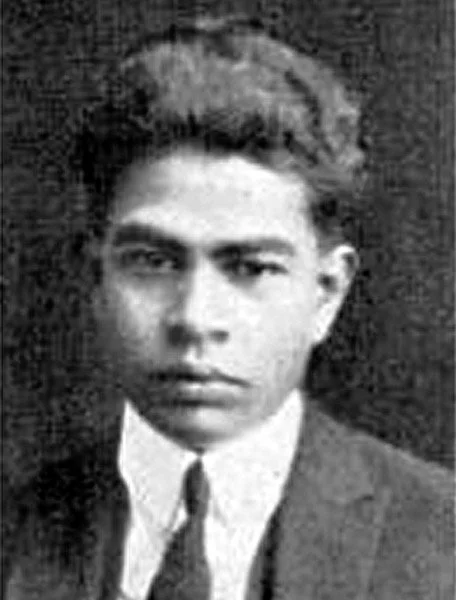
Emilio Lanier from Black Alumni at Dartmouth Association
Emilio would get degrees from Dartmouth and Harvard and taught English at Harvard for many years. In 1951 he was among a unique group of 35 educators selected by the Institute of International Education to teach in foreign countries. He taught in Japan for eight years and married his second wife and they had six children.
The details are not complete but it appears at one time Leonia was the assistant librarian at Lincoln University in Missouri and was a college graduate. At some point she ended up in the greater Houston, Texas area where both she and her mother Elizabeth are buried.
Greenwood Connections
There are several news paper articles that mention Professor Lanier’s interaction with other well-known people buried in Greenwood such as Bishop Charles Galloway, Dr. Sidney Redmond, fellow Smith Robertson educator Bettie Marino, and Reverend Marion Dunbar as the Laniers were members of Mt. Helm Baptist Church.
Author’s Note: This article was written by the author with the assistance of AI tools. The author directed the research, structure, and interpretation of the material, and has edited and reviewed the final content for accuracy and clarity.
Do You Have More Information to Share?
Our historical research is never truly finished. Whether you have insights into our antique rose collection or stories of ancestors who rest here, your contribution helps Mississippi’s past come to life.
